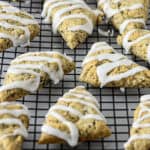
Earl Grey Scones - Lemon Glazed
Earl Grey tea infuses these tender scones with a delicate but delicious flavour note, and a lemony glaze completes this tea time treat.
Servings 12
Calories 229kcal
Equipment
Ingredients
- 2.5 cups flour all-purpose
- 3 tablespoon Earl Grey tea approximately 6 tea bags, cut open
- 2 tablespoon sugar
- 2.5 teaspoon baking powder
- 0.5 teaspoon baking soda
- 0.5 teaspoon salt
- .5 cup cold butter cubed
- 1 cup buttermilk
- 1 egg large
- 1 teaspoon vanilla extract
- 1 cup icing sugar
- 3 tablespoon lemon juice
Instructions
- Preheat oven to 400° Line a baking sheet with parchment paper, or dust with flour
- In a large mixing bowl, whisk together flour, tea, sugar, baking powder, baking soda, and salt
- Using a pastry blender, cut cold butter into the flour mixture until crumbly
- In a smaller bowl, whisk together buttermilk, egg, and vanilla
- Add buttermilk mixture to the dry mixture. Stir swiftly with a fork until dough comes together.
- On a lightly floured surface, lightly pat dough into a rectangle, about 9" x 6"
- Trim the edges of the rectangle to straighten, then cut the rectangle into three equal pieces.
- Cut each piece of dough into two squares. Cut each square diagonally into four triangles. Transfer the triangles to the prepared baking sheet.
- Transfer the triangles to the prepared baking sheet. Bake in the center of oven 18-20 minutes until golden.
- Transfer to a rack and allow to cool
Lemon Glaze
- In a bowl, combine icing sugar, and lemon juice.
- Using a spoon, drizzle the glaze over the cooled scones.
Notes
- Use cold, not room temperature, ingredients. Make sure that your butter, eggs, and milk are cold straight from the fridge. The butter should melt in the oven, not during mixing. This will result in flaky, tender scones, which is the goal.
- Mix the dough by hand. You can quickly overwork scone dough when you blend the ingredients in a food processor, so I highly recommend you use a pastry cutter and wooden spoon instead. You could also freeze the butter and shred it with a cheese grater or box grater.
- Chill the dough. Again, for the same reason, if your kitchen is warm, chill the shaped scone dough in the fridge for 15 minutes before baking.
- Shape the dough with your hands, not a rolling pin. It's easy to overwork the dough if you roll it out, so I always pat it gently with my hands until it's the right shape and thickness.
- Use a pizza cutter. Cutting the triangle scones with a pizza cutter is much easier and neater. A sharp bench scraper would also work.
- Achieve the best texture. A good scone will have a nice rise, with a crisp, golden exterior, and a tender, slightly cakey interior.
- Brush the scone dough with an egg wash, buttermilk, or heavy cream. This is optional, but it will create a deeper golden brown color on the tops of your scones.
- Don't use old tea. Although tea doesn't go bad, it loses flavor over time, especially if the tea bags are not individually packaged. If the tea is too old, the scones won't have much flavor.
- Let the scones cool before glazing. The glaze will melt and slide off hot scones, so the scones need to cool first.
- Adjust the consistency of the glaze. If you want a thinner glaze, add more lemon juice.
- Add lavender. Lavender is a delightful combo with lemon and Earl Grey. Add a teaspoon of culinary lavender to the dry ingredients, or make a lavender glaze by adding it along with the lemon juice.
- Storage. Scones are always best eaten freshly baked. If you must store them, do so in an airtight container or individually wrapped in plastic wrap at room temperature for up to 2 days.
-
- To freeze baked scones: Allow them to cool completely, then flash freeze them on a baking sheet for 30 minutes. Pack the semi-frozen scones in airtight freezer bags or containers until you are ready to use them. Remove them from their container or bags to defrost so they don't get soggy. You can also wrap the scones individually for freezing, which is convenient if you just want one or two at a time.
- To freeze unbaked scones: make the dough, cut it into shapes, and flash freeze on a baking sheet. Then transfer the unbaked frozen scones to a freezer bag or container. When it's time to bake the scones, put the frozen scones on a baking sheet while the oven preheats. Bake the scones from frozen, adding a couple of minutes to the baking time.
Nutrition
Serving: 1scone | Calories: 229kcal | Carbohydrates: 34g | Protein: 4g | Fat: 9g | Saturated Fat: 5g | Polyunsaturated Fat: 1g | Monounsaturated Fat: 2g | Trans Fat: 0.3g | Cholesterol: 36mg | Sodium: 231mg | Potassium: 151mg | Fiber: 1g | Sugar: 13g | Vitamin A: 289IU | Vitamin C: 1mg | Calcium: 68mg | Iron: 1mg
